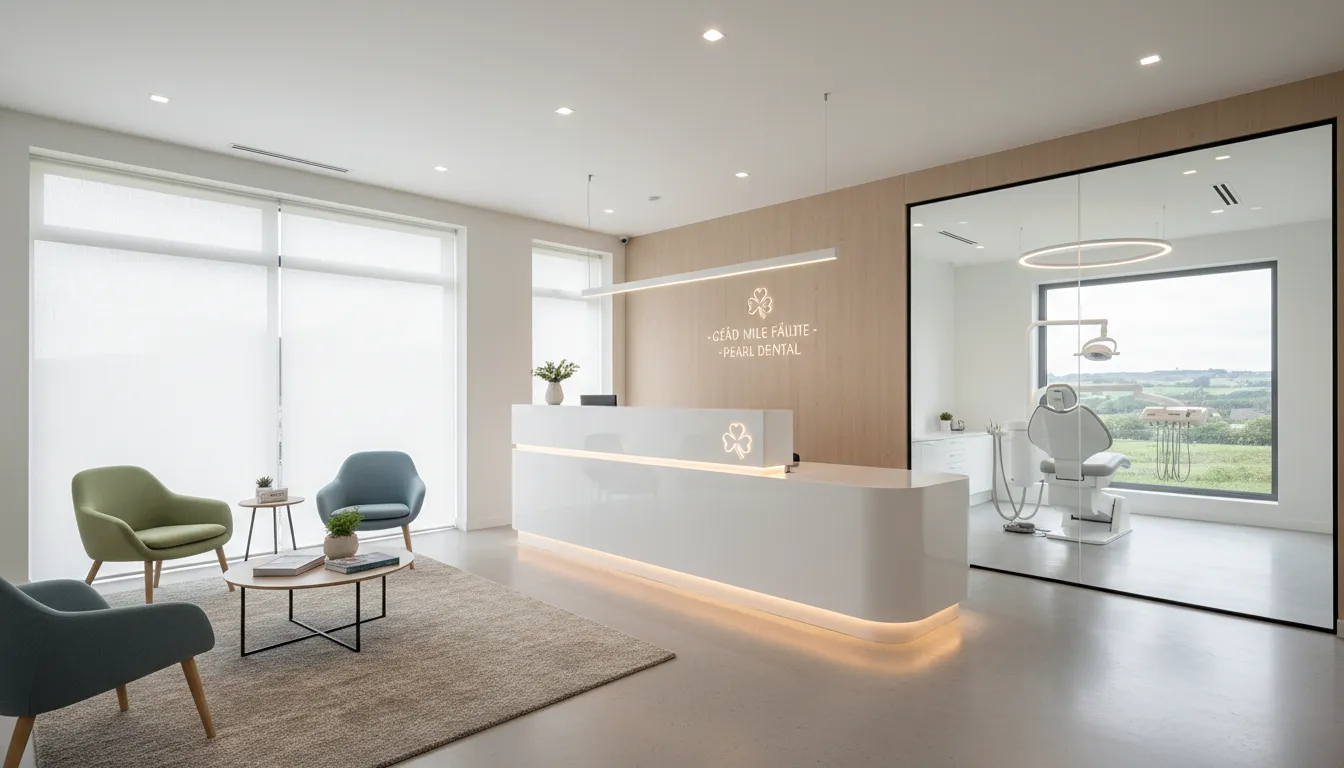
Dental Practice Website Design Ireland
Websites That Win New Patients
Your dental practice's online first impression matters more than ever. When someone has a toothache, needs a check-up, or searches for a specific treatment like dental implants or orthodontics, they don't flip through the Yellow Pages anymore. They search Google, check reviews, and decide in 10 seconds whether your practice looks trustworthy enough to book an appointment.
The problem is that most dental websites in Ireland are either outdated (built 10 years ago and never updated), confusing (so cluttered with information that patients can't find what they need), or simply forgotten after launch. A professional dental practice website isn't a nice-to-have. It's the most cost-effective way to attract new patients, reduce no-shows, and build trust before someone ever walks through your door.
In this guide, we've worked with dental practices across Dublin, Cork, Belfast, Galway and beyond to build websites that actually work. We'll show you what your dental website needs, how much it should cost, what the Dental Council expects, and exactly what you should do before hitting launch.
Key Facts About Dental Websites in Ireland
77%
of people search online before choosing a new dental practice
53%
of dental searches happen on mobile—your site must work on phone
EUR 1,200–1,800
average patient lifetime value. One booking pays for your website
Which Type of Dental Website Do You Need?
Not all dental practices are the same, so your website shouldn't be either. Here's what different practices typically need and what they should budget:
| Practice Type | Typical Scope | Key Features | Budget (EUR) |
|---|---|---|---|
| Solo Dentist Practice | General dentistry, 1 dentist, small team | About, services, contact, testimonials, local SEO basics | EUR 3,000–5,000 |
| Multi-Dentist Practice | 2–4 dentists, general dentistry, team pages | Staff profiles, appointment booking, patient portal, local SEO optimisation | EUR 5,000–10,000 |
| Specialist Practice | Orthodontics, implants, cosmetic dentistry | Before/after gallery, detailed treatment pages, insurance info, testimonial videos | EUR 8,000–12,000 |
| Dental Group/Chain | Multiple locations, multiple services, corporate site | Multi-location pages, staff directory, online booking system, blog, advanced SEO | EUR 10,000–15,000+ |
These costs assume a professionally designed, mobile-responsive website built on a platform like WordPress with proper security, hosting and 12 months of support. Prices vary based on location (Dublin is typically higher), complexity of features, and which agency you hire. We recommend getting 2–3 quotes and comparing not just price but what's included.
Patient Anxiety Relief Content
Many patients delay dental treatment due to anxiety. Websites addressing this directly—explaining procedures, showing relaxing office photos, discussing pain management, featuring friendly team bios—convert anxious patients who wouldn't otherwise book. Content like 'Nervous About Implants?' or videos showing your welcoming environment build reassurance and increase new patient inquiries from anxious patients willing to give you a chance.
Dental Council Compliance: What You Can and Can't Say
The Dental Council of Ireland takes dental advertising seriously. Your website isn't just a sales tool—it's part of your professional reputation and must comply with advertising standards. Breaching these rules can result in complaints, damage to your registration, and loss of patient trust.
What You Must Avoid on a Dental Website
- Misleading claims: Don't say you 'guarantee' results or make claims you can't back up. You can't claim to be 'the best' dentist in Ireland or guarantee teeth will be 'perfectly straight' after braces.
- Patient testimonials (used carelessly): Testimonials are allowed, but they can't be misleading. Avoid edited video or heavily curated reviews that suggest unrealistic outcomes. Be transparent about before/afters.
- Pressure tactics: Don't use urgent language like 'limited time offer' or 'act now or regret it' to push dental treatments. Cosmetic dentistry in particular is vulnerable to scrutiny here.
- Unqualified comparisons: Don't claim other dentists use inferior techniques or materials. Stick to explaining your approach rather than criticising competitors.
- Unlicensed therapy claims: Only mention treatments you and your team are qualified and registered to provide. If you mention a new technology, be clear about what evidence supports it.
- Cosmetic results without caveats: Before/after photos are fine, but they must include a disclaimer that results vary by individual.
What You Should Include
- Your qualifications and professional registration details (GDC/IDTS numbers if applicable)
- Clear explanation of treatments offered and what they involve
- Honest testimonials from real patients (with permission)
- Transparent pricing or 'price on request' if fees vary
- Details about your approach to patient care and safety
- Emergency contact information and out-of-hours procedures
Online Booking Benefits Patient Conversion
Patients expect to book appointments online. Offering online booking removes friction and increases appointment confirmations. Patients who can't easily book online will find another dentist. Integration with your practice management system ensures appointments sync automatically and reduces no-shows through automated reminders.
If you're uncertain about whether a claim is compliant, ask your professional body or have your website reviewed by someone familiar with Dental Council guidelines before launch. Compliance isn't restrictive—it actually builds trust because it shows you're ethical and professional.
12 Dental Website Mistakes That Cost You Patients
These are real mistakes we've seen cost dental practices lost appointments, damaged trust, and wasted money:
| Mistake | Why It Costs You | Real Cost |
|---|---|---|
| Phone number is hard to find or outdated | Patient can't book an appointment quickly and calls a competitor instead | 5–10 lost bookings per month (EUR 600–1,200 revenue) |
| Website is not mobile-responsive | 50%+ of patients visit on phone and can't use your site properly | 50% reduction in online inquiries |
| No online booking option | Patient interested in appointment but can't book without calling. Gives up. | 30–40% of interested leads lost |
| Slow page load (over 3 seconds) | Google penalises you in search rankings. Patients leave to find faster site. | Loss of 2–3 new patient inquiries weekly |
| No clear service pages for specific treatments | Patient searching 'dental implants Dublin' can't find you because you only have generic 'services' page | Missing 20–30% of search traffic for key treatments |
| Outdated team photos and staff information | Patients worry about whether practice is still open or if team has changed | Loss of trust, abandoned bookings |
| No patient reviews or testimonials visible | Without social proof, patients assume you're unproven or have something to hide | 20–30% of interested leads go to competitors with reviews |
| No clear insurance/payment information | Patient doesn't know if you take their plan and books elsewhere | Loss of insured patients |
| No emergency/out-of-hours information | Patient with toothache at night can't find what to do. Bad impression. | Frustrated patient, negative review, reputation damage |
| Contact form that doesn't send replies | Patient fills form thinking they've booked but message never arrives | Lost appointment + frustrated patient |
| No blog or educational content | Missing opportunity to rank for questions patients ask ("Do I need a root canal?", "Cost of teeth whitening Dublin") | Loss of 50+ monthly organic visitors |
| Focusing only on cosmetic dentistry (if you're general) | Patient searching for NHS/public dentistry won't find you if site only shows teeth whitening and veneers | Missing 30–40% of patient search volume |
Before/After Gallery Importance
For cosmetic dentistry, before/after galleries are essential. Potential patients researching smile makeovers, teeth whitening, or veneers want to see realistic examples of what's possible. Professional photography showing actual results builds confidence and converts browsing patients into booked appointments. Include clear disclaimers that results vary, but show genuine examples of your work.
ROI: What a Dental Practice Website Should Return
A common question from dental practices is: "Will this website pay for itself?" The short answer is yes—usually within the first 6 months. Here's the math:
| Metric | Conservative Estimate | Good Performance | Strong Performance |
|---|---|---|---|
| Monthly new patient inquiries from website | 3–5 | 8–12 | 15–20 |
| Conversion rate (inquiry to booked appointment) | 60% | 70% | 80% |
| New patient appointments booked per month | 2–3 | 6–8 | 12–16 |
| Average new patient value (first visit + follow-up treatment) | EUR 250–400 | EUR 250–400 | EUR 250–400 |
| Monthly revenue from website | EUR 500–1,200 | EUR 1,500–3,200 | EUR 3,000–6,400 |
| Annual revenue from website | EUR 6,000–14,400 | EUR 18,000–38,400 | EUR 36,000–76,800 |
| Website cost (one-time) | EUR 4,000 | EUR 4,000 | EUR 4,000 |
| Payback period | 3–8 months | 1–3 months | 2 weeks–1 month |
These numbers assume your website is well-optimised, includes clear calls-to-action, and you're supporting it with basic local SEO. If your website is poorly designed, broken, or buried in search results, you won't see these numbers. Check out our guide on fitness website design to see similar ROI patterns in other healthcare sectors.
Dental Website Launch Checklist: 24 Essential Points
Before your website goes live, make sure you've covered everything. We've grouped this into four categories:
Trust & Compliance
- 1.Dental Council registration details visible (GDC, IDTS, Dental Board Ireland)
- 2.Privacy policy and GDPR compliance statement
- 3.SSL certificate installed (https:// security)
- 4.Terms and conditions (covering patient consent, cancellation policy)
- 5.Patient testimonials reviewed for compliance
- 6.Before/after photos include appropriate disclaimers
Services & Content
- 7.Separate page for each major service (implants, cosmetic, orthodontics, etc.)
- 8.Team pages with photos and qualifications for each dentist
- 9.Clear information about opening hours and emergency contact
- 10.Pricing information (either listed or 'contact for quote')
- 11.Insurance and payment methods accepted clearly listed
- 12.FAQ section addressing common patient questions
Patient Conversion
- 13.Phone number visible and clickable on every page
- 14.Online booking system tested and working
- 15.Contact form tested (ensure emails are being received)
- 16.Call-to-action buttons clear and visible above the fold
- 17.Patient reviews/testimonials visible with photos if possible
- 18.Mobile responsiveness tested on iPhone and Android
SEO & Technical
- 19.Google Business Profile created and optimised
- 20.Schema markup added (LocalBusiness, MedicalBusiness)
- 21.Meta titles and descriptions optimised for each page
- 22.Page speed tested (target: under 3 seconds on mobile)
- 23.Analytics and Search Console configured
- 24.Backup and security monitoring configured
Before you declare launch 'complete', work through this checklist with your web designer or agency. Each point matters—skipping even a few will reduce how well your website performs.
Frequently Asked Questions About Dental Websites in Ireland
How much does a dental website cost in Ireland?
Solo dental practices typically invest EUR 3,000–5,000. Multi-dentist practices run EUR 5,000–10,000. Specialist or group practices with advanced features sit at EUR 8,000–15,000+. These costs assume a professionally designed, mobile-responsive website with hosting, security and 12 months of support included. Prices vary based on location (Dublin typically costs more), complexity of features (online booking, patient portal), and the agency you hire. Always get 2–3 quotes and compare what's actually included, not just the headline price.
What advertising rules apply to dental websites in Ireland?
The Dental Council of Ireland regulates dental advertising. Your website must not make misleading claims, use patient testimonials that could be misleading, or promote treatments in ways that create unrealistic expectations. You can't guarantee results, use pressure tactics, or make claims you can't back up with evidence. Before/after photos are allowed but should include a disclaimer that results vary. When in doubt, have your website reviewed by someone familiar with Dental Council guidelines before launch. Compliance is straightforward when you focus on being honest about what you offer.
Should each dental treatment have its own page?
Yes. Separate pages for each treatment capture specific search queries. Someone searching 'dental implants Dublin' won't find you if implants are mentioned briefly on a generic services page. Each treatment page should explain what the treatment is, why someone might need it, your approach, realistic outcomes, cost range, and a call-to-action to book. This approach also helps with website performance and SEO, making it more likely you'll rank for specific, local treatment searches.
How do patients find dental practices online?
The majority search on Google—either 'dentist near me', 'dentist in [town]', or for specific treatments like 'orthodontist Dublin' or 'dental implants Cork'. Your Google Business Profile is critical for local searches. Some patients check online reviews on Google, Facebook, or Trustpilot before booking. Some use NHS websites or referral sites. The best way to be found is to: (1) set up and optimise your Google Business Profile, (2) build an SEO-friendly website with location and treatment pages, (3) collect patient reviews, (4) consider local SEO services if budget allows.
Do I need online booking?
It's strongly recommended. Patients expect to book online—especially for first appointments. Without it, interested patients either have to call (which you may miss) or find another practice. Online booking doesn't replace phone calls; it captures patients who prefer digital booking and frees up your team to focus on clinical work. Systems like Acuity Scheduling, Calendly, or integrated practice management software are affordable and easy to set up.
How long does a dental website take to build?
4–6 weeks for a solo practice. 6–10 weeks for multi-dentist or specialist practices with advanced features. Timeline depends on how quickly you provide content, photos and approval. Some of this time includes your input—supplying team bios, choosing photos, reviewing drafts. A good agency will provide a clear project timeline at the start and keep you updated. Rushing often results in a lower-quality website; giving the process proper time usually yields better results.
Should my dental website be on WordPress, Wix, or Shopify?
WordPress is the best choice for a dental practice website. It's flexible, SEO-friendly, secure (when properly maintained), and scales as your practice grows. Wix is easier for non-technical users but less flexible and not as SEO-strong. Shopify is built for ecommerce and not suitable for a service-based business like dentistry. If you're hiring an agency, ask what platform they recommend and why. Most professional agencies in Ireland use WordPress for health and service businesses.
What About Ongoing Support and SEO?
Your website needs ongoing support—security updates, backups, performance monitoring—typically EUR 30–50 per month with a good agency. SEO is separate and optional but highly recommended. Basic local SEO (optimising your Google Business Profile, building local citations, ensuring your website is technically sound) is often included. Ongoing SEO (monthly optimisation, content updates, link building) costs EUR 200–500+ per month depending on how competitive your market is. For a dental practice in a medium-sized Irish town, basic SEO support is usually enough. In Dublin or other competitive cities, investing in more robust content marketing strategy makes sense.
Ready to Build a Dental Practice Website That Works?
Let's discuss your practice's specific needs and create a website that brings in new patients and establishes your practice as a trusted provider.
Get in TouchRelated Guides for Irish Dental Practices
If you found this guide helpful, check out these related resources on professional services websites:
- Hotel & Accommodation Website Design Ireland – Similar compliance and professional standards guide
- Gym & Fitness Website Design Ireland – Booking and membership conversion models
- Accountant Website Design Ireland – Professional credibility through web design
- Estate Agent Website Design Ireland – Professional trust-building with digital presentation
Geographic Resources for Irish Dental Practices
Explore web design and SEO services specific to your location:
- Web Design Cork – Professional websites for Cork-based practices
- Web Design Dublin – Dublin dental website design and SEO
- Web Design Galway – Galway-focused web design services
- Web Design Belfast – Northern Ireland dental websites
Your dental practice deserves a website that works as hard as you do. A professional, compliant, well-designed website doesn't just look good—it attracts the right patients, builds trust, and pays for itself many times over. If you're ready to discuss your practice's specific needs or want a quote for a dental website, get in touch. We're here to help.
Written by
Founder of Web Design Ireland. Helping Irish businesses make smart website investments with honest, practical advice.