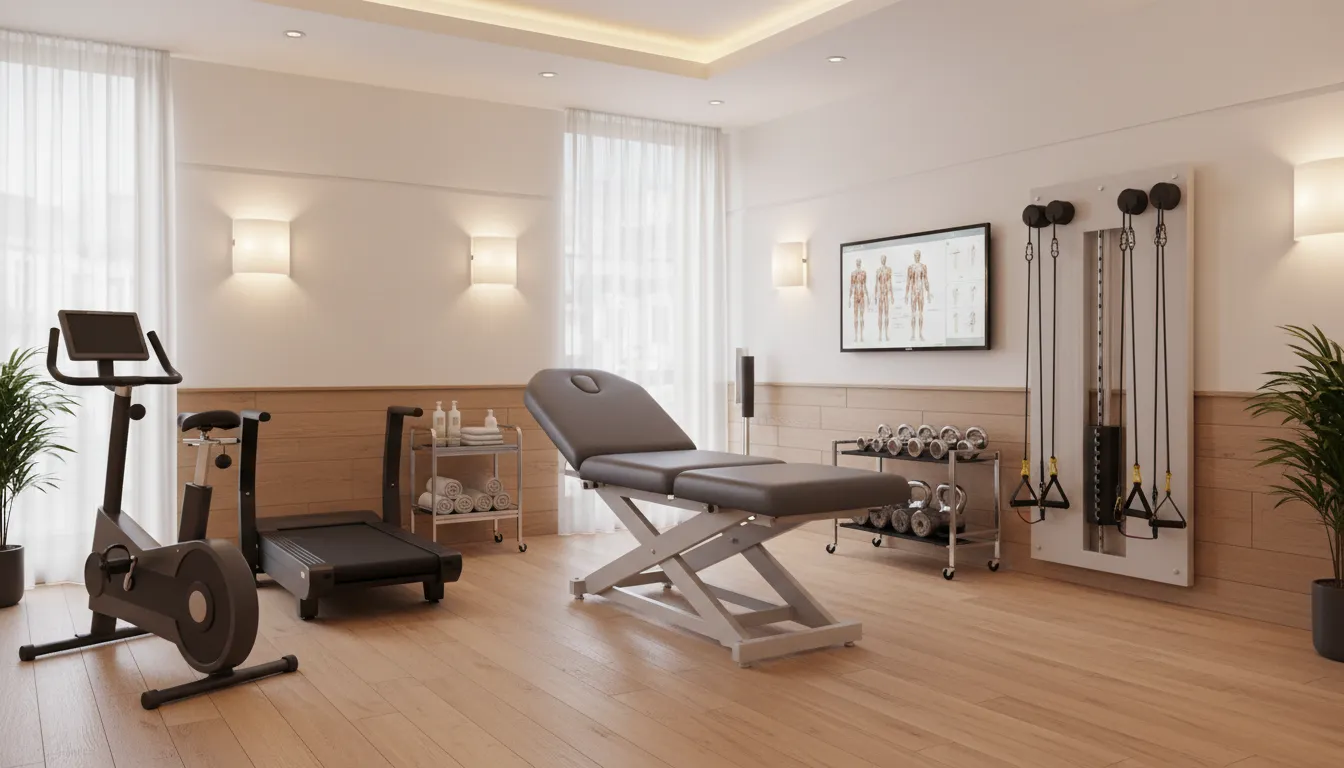
When someone hurts their back, twists their ankle, or gets referred by their GP for physio, what's the first thing they do? They Google 'physio near me'. They look at the first few results, check reviews, and book with whoever makes it easiest. If your physiotherapy website doesn't let them book online, doesn't explain what you treat, and doesn't give them a reason to choose you — they'll book with someone else.
The Irish physiotherapy market is competitive. There are over 4,500 CORU-registered physiotherapists in Ireland, and the number of private clinics continues to grow. Whether you're a solo practitioner working from a home clinic or a multi-therapist practice with sports teams and corporate contracts, your website is the foundation of your patient acquisition.
Yet most physio websites in Ireland are underwhelming. A homepage, an 'About' page, a generic 'Services' page listing everything in bullet points, and a phone number. That's not a website that grows a practice — it's a website that exists because someone said you should have one.
Industry Growth Opportunity
With over 4,500 registered physiotherapists in Ireland and growing demand for specialist services, a professional online presence separates thriving practices from struggling ones. The market has room for growth, but patients will choose the clinic with the best digital experience.
What Physiotherapy Patients Search For
Understanding what patients actually type into Google tells you exactly what your website needs. The most common physio searches in Ireland include:
- 'Physio near me' / 'physiotherapist [town name]' — location-based searches from people ready to book
- 'Back pain physio' / 'knee physio' / 'shoulder physio' — condition-specific searches
- 'Sports physio [town]' / 'sports injury clinic' — athletes and weekend warriors
- 'Physio cost Ireland' / 'how much is physio' — price-conscious patients
- 'Physio covered by VHI / Irish Life / Laya' — insurance queries
- 'Physio after ACL surgery' / 'post-op physio' — specific rehabilitation
- 'Physio for pregnancy' / 'pelvic floor physio' — specialist services
Each of these searches represents a patient looking for help. Your website needs a page that answers each query directly, provides the information they need, and makes booking effortless.
Essential Features for Physio Websites
| Feature | Why It Matters | Priority |
|---|---|---|
| Online Booking System | Patients expect to book instantly. Integration with Cliniko, Jane App, Nookal, or similar. | Essential |
| Treatment-Specific Pages | Individual pages for back pain, sports injuries, post-op rehab, etc. Each drives SEO and answers patient questions. | Essential |
| Therapist Profiles | Qualifications, specialisms, CORU registration, photos. Patients want to know who'll be treating them. | Essential |
| Insurance Information | Which health insurers you're covered by, how to claim, direct billing if applicable. | Essential |
| Mobile Responsive Design | Patients in pain search on their phone. Booking must work perfectly on mobile. | Essential |
| Pricing Page | Transparent pricing for initial assessment and follow-up sessions. Removes the #1 barrier to booking. | Essential |
| Patient Testimonials | Google reviews and success stories build trust. Especially important for specialist treatments. | Recommended |
| Blog / Exercise Library | Condition guides, exercise videos, recovery tips. Drives organic traffic and positions you as an expert. | Recommended |
| Location & Parking Info | Detailed directions, parking availability, accessibility information. Reduces no-shows. | Recommended |
| Contact Form with Triage | Smart form that asks about the injury/condition so you can prioritise and prepare. | Recommended |
Boost Bookings with Mobile-First Design
Over 75% of physio searches happen on mobile phones. A responsive website with one-click booking on smartphone screens can increase your appointment bookings by 30-40%. Test your booking flow on phones—every second counts when a patient is in pain.
Online Booking: The Make or Break Feature
If your physio website doesn't have online booking in 2026, you're losing patients daily. It's that simple. A patient with back pain at 9pm on a Sunday will book with the first clinic that lets them secure an appointment — they won't wait until Monday to phone around.
The most popular practice management systems for Irish physiotherapists include:
- Cliniko — The most widely used in Ireland. Excellent online booking, patient records, invoicing, and health insurance integration. Embeds directly into your website.
- Jane App — Growing rapidly. Beautiful booking experience, telehealth built-in, online intake forms. Popular with newer practices.
- Nookal — Strong in multi-practitioner clinics. Group classes, waiting list management, detailed reporting.
- PhysiTrack / Physiapp — Combines practice management with exercise prescription. Patients get their home exercise programme through the same platform.
- Power Diary — Affordable option with solid booking and patient management. Good for solo practitioners.
Your website should integrate seamlessly with your chosen system. The booking widget or link should be prominent on every page — not buried in the footer. 'Book Now' should be as easy to find as the Google logo.
Physio Practice Types and Website Investment
| Practice Type | Key Website Features | Typical Investment |
|---|---|---|
| Solo Practitioner | Booking, treatment pages, about, testimonials, insurance info | €3,000 – €5,000 |
| Multi-Therapist Clinic | Team profiles, multiple booking calendars, specialisms, blog | €4,000 – €7,000 |
| Sports Physio / Performance Clinic | Team/athlete services, injury guides, video content, event physio info | €4,000 – €7,000 |
| Women's Health / Pelvic Floor Specialist | Sensitive content handling, privacy-focused design, specialist service pages | €3,500 – €6,000 |
| Paediatric Physio | Child-friendly design, parent resources, developmental milestone info, referral pathway | €3,500 – €6,000 |
| Multi-Discipline Clinic (Physio + Other) | Multiple practitioner types, shared booking, cross-referral, comprehensive service pages | €5,000 – €10,000 |
| Physio Chain (Multi-Location) | Location pages, centralised booking, brand consistency, careers section | €8,000 – €15,000 |
CORU Registration and Your Website
Physiotherapy is a regulated profession in Ireland. All practising physiotherapists must be registered with CORU (the Health and Social Care Professionals Council). Your website should reflect this:
- Display each therapist's CORU registration number on their profile.
- Link to the CORU public register so patients can verify.
- Use the protected title 'Physiotherapist' correctly — only CORU-registered practitioners can use this title.
- If you employ other professionals (sports therapists, massage therapists), clearly distinguish their qualifications from chartered physiotherapists.
- Reference your membership of the Irish Society of Chartered Physiotherapists (ISCP) if applicable.
Regulatory Compliance Matters
CORU registration is non-negotiable in Ireland. Your website must clearly display each therapist's registration status. This isn't just a trust signal—it's a legal requirement. Patients can verify credentials through the CORU public register, and you should provide the link prominently.
SEO for Physiotherapists
Physio SEO combines local search dominance with condition-specific content. Our team has helped physiotherapy clinics across Dublin, Cork, and Galway dominate their local markets. Here's the strategy:
- Google Business Profile — Complete every section. Add photos of your clinic weekly. Respond to every review. List all services individually. Post about conditions, tips, and clinic updates. This drives your visibility in the map pack.
- Treatment pages — Create dedicated pages for every condition you treat: back pain, neck pain, sports injuries, post-surgical rehab, sciatica, frozen shoulder, knee pain, running injuries. Each page targets specific searches and demonstrates expertise.
- Location pages — If you serve multiple areas, create pages targeting each: 'Physio in Blackrock', 'Sports Physio Galway'. Include local references, directions, and area-specific content.
- Insurance pages — 'Physio covered by VHI', 'Irish Life physio claim' — these are high-intent searches. Create a comprehensive insurance page.
- Exercise and advice content — Blog posts and videos about common conditions, exercises, and recovery. 'Best exercises for lower back pain', 'How to recover from a hamstring strain'. This captures informational searches and builds your reputation.
Traffic Growth Impact
Physio clinics with optimised local SEO see 60-80% increase in qualified patient enquiries within 6 months.
Conversion Boost
Clear pricing + online booking + testimonials = 25-35% conversion rate from website visitor to booked appointment.
Common Physio Website Mistakes
| Mistake | Why It Hurts | What to Do Instead |
|---|---|---|
| No online booking | Losing patients to clinics that let them book at 10pm | Integrate Cliniko, Jane App, or similar with prominent 'Book Now' button |
| One generic 'Services' page | Misses SEO opportunities and doesn't answer specific questions | Individual pages for every condition and treatment type |
| No pricing information | Patients assume you're expensive and don't enquire | Clear pricing: initial assessment and follow-up session costs |
| Missing insurance details | Patients don't know if they're covered and go elsewhere | Comprehensive insurance page with claim process for each provider |
| Stock photos of models stretching | Feels generic and impersonal | Professional photos of your actual clinic, team, and treatment rooms |
| No CORU registration visible | Misses trust signal; doesn't meet best practice | CORU numbers on therapist profiles, link to public register |
| Ignoring Google Business Profile | Invisible in 'physio near me' searches | Fully optimise GBP with weekly updates, photos, and review responses |
| No mobile optimisation | Patients in pain search on phones — broken mobile = lost patients | Mobile-first design with easy booking flow on all devices |
| No exercise or advice content | Missing organic traffic from people searching for help | Regular blog content and exercise guides for common conditions |
| Poor appointment confirmation | Patients unsure if booking went through; leads to no-shows | Instant email and SMS confirmation with clear appointment details |
The ROI of a Physio Website
| Metric | Conservative Estimate |
|---|---|
| Average initial assessment fee | €70 |
| Average total treatment course (4–6 sessions) | €300 |
| New patients per month from website | 20 |
| Annual revenue from website patients | €72,000 |
| Website investment | €3,000 – €7,000 |
| First year ROI | 10x – 24x return |
A physio clinic seeing 20 new patients per month through its website generates €72,000+ in annual revenue from those patients alone. That's before considering repeat visits, referrals from satisfied patients, and the corporate or sports contracts that come from having a professional online presence.
Real-World Results from Irish Physiotherapy Clinics
We've helped physiotherapy practices across Ireland increase patient bookings by 40-60% in the first year. A multi-therapist clinic in Dublin went from 8-10 new patients per month to 25+ within 8 months through optimised local SEO and online booking integration. Your clinic can achieve the same results with the right strategy.
Your Physio Website Checklist
- Online booking integrated with practice management system
- Individual treatment pages for every condition you treat
- Therapist profiles with CORU registration and specialisms
- Clear pricing for assessments and sessions
- Insurance information with claim guidance
- Mobile responsive design with easy booking on phone
- Google Business Profile fully optimised
- Professional photos of clinic and treatment rooms
- Patient testimonials and Google reviews displayed
- Blog with exercise guides and condition advice
- SSL certificate installed
- Cookie consent banner (GDPR compliant)
- Privacy policy published
- Location map with parking and accessibility info
- Click-to-call button on mobile
- Referral information for GPs and consultants
- FAQs covering common patient questions
- Fast loading speed (under 2 seconds)
- Analytics with booking funnel tracking
- Exercise video library or PhysiTrack integration
Building Your Online Presence Across Ireland
Whether you're based in Dublin, Cork, Galway, or anywhere else in Ireland, the fundamentals of a successful physio website remain the same. However, local context matters. Clinics serving patients in Belfast or Limerick will benefit from location-specific optimisation, and we've worked with physio practices across Northern Ireland to dominate their local markets.
If you're scaling across multiple locations, a platform like our multi-location web design approach ensures consistent branding while allowing location-specific treatment pages and booking systems. Learn more about how our team helps healthcare professionals establish their digital presence.
Frequently Asked Questions
How much does a physio website cost in Ireland?
A professional physiotherapy website typically costs between €3,000 and €7,000 for a single clinic. Solo practitioners can get a strong site for €3,000–€5,000. Multi-therapist clinics with extensive treatment pages and blog content range from €4,000 to €7,000. Multi-location physio chains expect €8,000 to €15,000.
Which booking system is best for Irish physios?
Cliniko is the most widely used in Ireland and integrates well with websites. Jane App is gaining popularity for its user experience. Both handle online booking, patient records, invoicing, and insurance claims. The best choice depends on your practice size and whether you need features like telehealth or exercise prescription.
How do I rank above other physios in my area?
Three things have the biggest impact: a fully optimised Google Business Profile (with regular photos, review responses, and service listings), individual treatment pages targeting condition-specific searches ('back pain physio [your town]'), and consistent Google reviews from patients. Content marketing about common conditions builds long-term authority.
Do I need to display my CORU number on my website?
While not strictly required by CORU, it's strongly recommended and considered best practice. Displaying your CORU registration number builds trust with patients and allows them to verify your credentials. It also distinguishes you from unregistered practitioners offering similar services under different titles.
Ready to Build a Website That Grows Your Practice?
We build physiotherapy websites that integrate with your booking system, rank for local searches, and convert visitors into patients. Whether you're a solo practitioner or a multi-clinic operation, we'll create a website that works as hard as you do.
Get in TouchWritten by
Founder of Web Design Ireland. Helping Irish businesses make smart website investments with honest, practical advice.