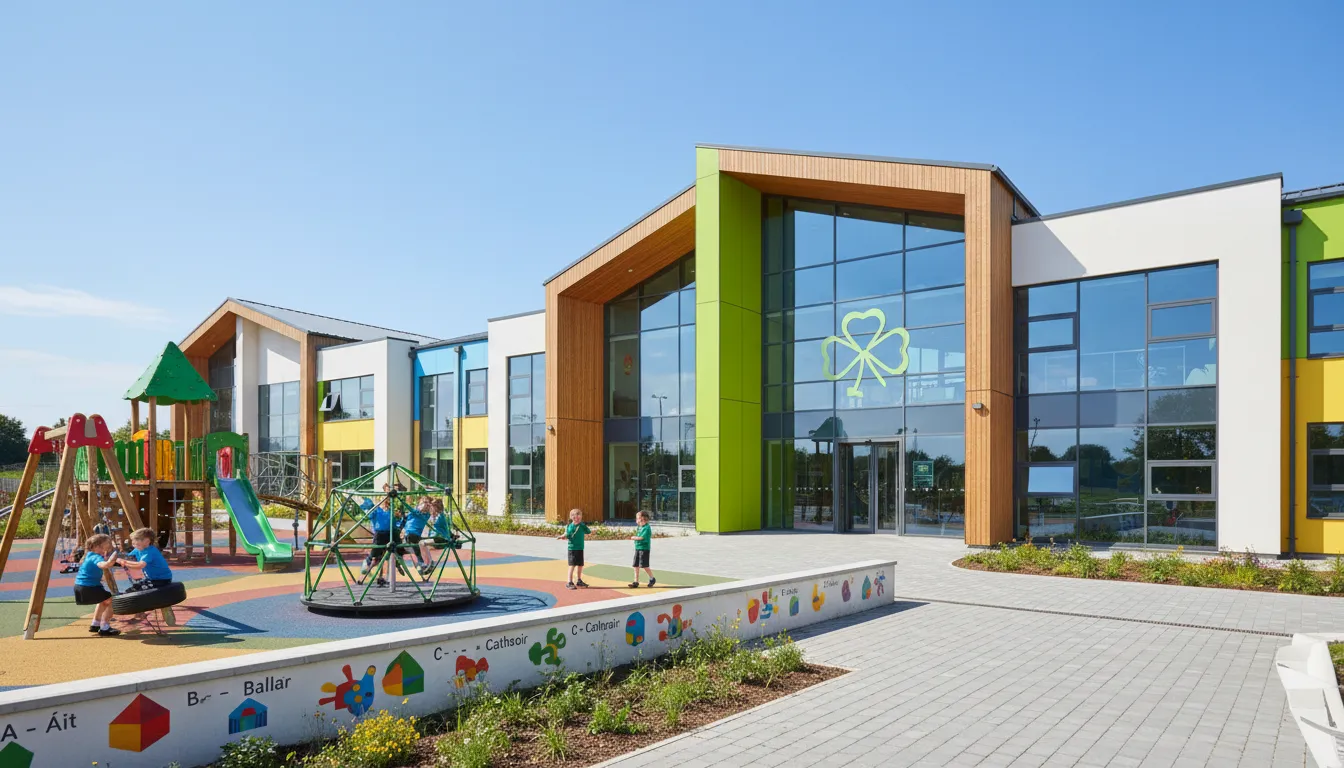
If you're a school principal in Ireland, you already know the problem. Parents expect to find everything online — enrolment forms, term dates, lunch menus, uniform information, school policies. But most school websites in Ireland look like they were built in 2012 and haven't been updated since.
The challenge for schools is unique. You don't have a marketing budget. You probably don't have a dedicated IT person. And the website often falls to whichever teacher is 'good with computers'. The result? Outdated information, broken links, PDFs that won't open on phones, and a site that actively frustrates the parents it's supposed to serve.
A good school website isn't about flashy design. It's about making every parent's life easier, giving prospective families a genuine sense of your school community, and reducing the avalanche of emails and phone calls to the office about things that should be on the website already.
Reduce Office Workload with Online Systems
A well-designed school website with searchable calendars, online enrolment forms, and accessible policies reduces office phone calls and emails by 40-50%. That's reclaimed time to handle more important school business. The website is a tool that serves your staff, not just your community.
Why School Websites Matter More Than You Think
For existing parents, the website is a daily tool. Can they find the school calendar without ringing the office? Can they download the book list in August? Can they see what's happening in their child's class? If the answer to any of these is 'no', you're generating unnecessary admin work for your school secretary.
For prospective parents, the website is their first impression. When a family moves to your area, the first thing they do is Google local schools. Your website needs to communicate your ethos, show your facilities, outline the enrolment process, and make them feel welcome — all before they ever visit. Schools with poor websites lose enrolments to neighbouring schools that present themselves better online, regardless of actual teaching quality.
And for the Department of Education, TUSLA inspections, and Patron bodies, your website is increasingly where they expect to find policies, plans, and public information. Having these easily accessible and up to date isn't just convenient — it's becoming a compliance requirement.
Essential Features for Every School Website
| Feature | Why It Matters | Priority |
|---|---|---|
| School Calendar | Parents need term dates, holidays, events — synced with Google Calendar or iCal so they can add to their phones. | Essential |
| Online Enrolment Forms | Digital forms that parents can complete from their phone. No more printing, filling, scanning back. Saves admin hours. | Essential |
| News & Updates Section | Newsletters, event announcements, school achievements. Easy for staff to update without technical knowledge. | Essential |
| Mobile Responsive Design | Parents browse on phones at pickup, in the car, at work. Must work perfectly on all devices. | Essential |
| Photo Galleries | Class activities, sports days, school trips. Parents love seeing their children's school life. (GDPR permissions essential.) | Essential |
| Policy Documents Section | Anti-bullying, admissions, code of behaviour — all required to be publicly available. Organised, searchable, up to date. | Essential |
| Staff Directory | Teacher names, class assignments, contact for principal and office. Builds trust and connection. | Recommended |
| Parents' Association Page | Meeting dates, fundraising updates, committee contacts. Keeps the school community informed. | Recommended |
| Lunch Menu | Weekly or monthly menus for hot school meals. Reduces office queries significantly. | Recommended |
| Uniform Information | Supplier details, price lists, photos. Saves dozens of phone calls every August. | Recommended |
| After-School Activities | Sports, music, coding clubs — schedules, contacts, sign-up information. | Recommended |
| Class Pages or Blog | Individual class updates, homework reminders, learning highlights. Keeps parents connected to classroom life. | Nice to Have |
Enrolment Conversion
Schools with clear enrolment processes and online forms see 60%+ of prospective parents complete enrolment on the first visit to the website, vs. 15% who have to email or call.
Compliance Ready
Schools with organised, current policy sections on their website pass TUSLA inspections faster and score higher on governance evaluation. It's not just convenience—it's compliance.
School Types and Website Needs
Different school types have different requirements. Here's what to expect:
| School Type | Key Website Features | Typical Investment |
|---|---|---|
| Primary School | Calendar, enrolment forms, news, gallery, policies, lunch menu | €2,500 – €4,500 |
| Secondary School | Subject information, TY programme, CAO guidance, exam timetables, extracurriculars | €3,500 – €6,000 |
| Gaelscoil / Gaelchóláiste | Bilingual design (Irish/English toggle), Gaeltacht info, cultural events | €3,000 – €5,500 |
| Special Education School | Enhanced accessibility (WCAG AAA), resource links, therapy schedules, transport info | €3,000 – €5,500 |
| DEIS School | Community links, breakfast club, HSCL info, after-school programmes, parent resources | €2,500 – €4,500 |
| Multi-School Campus | Shared calendar, individual school sections, unified admissions, staff directory | €5,000 – €8,000 |
| ETB / Community College | Course listings, adult education, QQI links, student portal, campus info | €4,000 – €7,000 |
| Private / Fee-Paying School | Premium design, virtual tour, alumni network, boarding info, scholarship details | €5,000 – €12,000 |
GDPR and Child Safeguarding Online
This is non-negotiable for schools. Every school website must be GDPR compliant, and when it comes to children's data, the requirements are stricter. Here's what your website must address:
- Photo consent — You must have written parental consent before publishing any photos of students. Your website should make it easy to manage which students appear in galleries.
- Cookie consent — A proper cookie banner that allows visitors to accept or reject non-essential cookies. Many school websites still don't have this.
- Privacy policy — Clearly stating what data you collect through the website (enrolment forms, contact submissions) and how it's processed.
- Form data handling — Any information submitted through online forms must be securely transmitted (SSL/HTTPS) and stored appropriately. Not saved in plain text on a shared drive.
- Staff email addresses — Consider whether publishing full staff email addresses creates a data risk. A contact form routed to the right person may be safer.
- Student names — Be cautious about publishing full student names alongside photos, especially for younger children. First names only, or no names at all.
GDPR is More Than a Checkbox
Schools that take GDPR seriously — with proper consent processes, cookie banners, and secure form handling — build trust with parents and protect their reputation. It's not bureaucracy; it's child protection.
Making Your School Website Easy to Manage
The biggest reason school websites go out of date is that they're too hard to update. If your current site requires a web developer every time you need to change the term dates or add a newsletter, the system is broken.
A modern school website built on WordPress gives your school secretary or designated staff member the ability to update content as easily as editing a Word document. Add a news post, upload a newsletter PDF, change the lunch menu — all from a simple dashboard. No coding required.
The best school websites we've seen are ones where the office staff feel confident updating them daily. That's the standard to aim for. Training should be included with every school website project.
Common School Website Mistakes
| Mistake | Why It Hurts | What to Do Instead |
|---|---|---|
| Outdated calendar and news | Parents lose trust and stop checking the website | Assign one person to update weekly; make it part of their role |
| PDF-only content | PDFs don't work well on phones and aren't accessible | Use web pages for content; offer PDF as optional download |
| No mobile responsive design | 60%+ parents browse on their phone | Mobile-first design is non-negotiable |
| Missing GDPR compliance | Risk of data complaints to the DPC | Cookie banner, privacy policy, consent management for photos |
| No online enrolment option | Paper forms create admin burden and barriers | Digital forms with secure data handling |
| Hidden or outdated policies | TUSLA and Patron bodies expect easy access | Dedicated, organised policy section with current documents |
| Stock photos instead of school photos | Feels generic — parents want to see the real school | Use actual school photos (with consent) to show community |
| No accessibility features | Excludes parents with disabilities; potential legal risk | WCAG AA compliance minimum; consider AAA for special schools |
| Too much jargon | Not all parents speak English as first language | Clear, simple language; consider multilingual options for diverse communities |
| Contact form doesn't work | Frustrated parents, missed enrolment enquiries | Test forms regularly; ensure submissions reach the right person |
Accessibility: Not Optional for Schools
School websites must be accessible to all parents, including those with visual impairments, motor difficulties, or cognitive disabilities. Under the EU Web Accessibility Directive (which applies to public sector bodies including schools receiving state funding), WCAG 2.1 AA compliance is the minimum standard.
In practical terms, this means: proper heading structure, alt text on all images, sufficient colour contrast, keyboard navigation support, and forms that work with screen readers. It also means no essential information locked in images (like a photographed timetable) and no auto-playing videos.
Accessibility Helps Everyone
WCAG accessibility standards aren't just for people with disabilities. They also help parents using phones on slow connections, reading on small screens, or accessing your site in noisy environments. It's inclusive design that works better for all families.
Your School Website Checklist
- School calendar with sync to Google Calendar/iCal
- Online enrolment forms with secure data handling
- Mobile responsive design tested on multiple devices
- News/updates section that staff can easily manage
- Photo galleries with GDPR consent management
- All policies published and current (admissions, anti-bullying, etc.)
- Staff directory with appropriate contact information
- Cookie consent banner (GDPR compliant)
- Privacy policy published and accessible
- WCAG 2.1 AA accessibility compliance
- SSL certificate (HTTPS) installed
- Lunch menu section (if applicable)
- Uniform and book list information
- After-school activities with schedules
- Parents' Association information
- Google Maps showing school location
- Simple CMS training provided to staff
- Contact form tested and delivering to correct inbox
- Fast loading speed (under 3 seconds)
- Bilingual option if Gaelscoil or diverse community
Building Your School's Digital Presence
Whether you're a rural primary school in Cork, a secondary school in Dublin, or a Gaelscoil in Galway, we've built websites for schools of all sizes. We understand your budget constraints and your need for a system that works for understaffed schools. See how other organisations like charities and not-for-profits use their websites to build community engagement, or how online systems can manage complex operational needs.
Frequently Asked Questions
How much does a school website cost in Ireland?
A professional primary school website typically costs between €2,500 and €4,500. Secondary schools with more complex needs (subject pages, exam info, student portals) range from €3,500 to €6,000. Multi-campus or private schools with premium features can cost €5,000 to €12,000. Many schools fund this through the capitation grant or Parents' Association fundraising.
Can our school secretary manage the website without technical skills?
Yes, and this should be a core requirement. A WordPress website with a well-designed admin dashboard lets any staff member update content, add news posts, upload documents, and manage the calendar. If your staff can use Microsoft Word, they can manage a properly built WordPress site. Training should be included as part of the project.
Does our school website need to be in Irish?
For Gaelscoileanna and Gaelchóláistí, a bilingual website (Irish and English) is expected and reflects the school's identity. For English-medium schools, it's not required but having key information available in Irish demonstrates commitment to the language. Some schools in diverse areas also provide information in other community languages.
What about Aladdin, VSware, and other school management systems?
Aladdin and VSware handle school administration (roll call, reports, parent communication). Your website serves a different purpose — public information, enrolment, and showcasing your school. They complement each other. Some schools link to their Aladdin parent portal from the website for easy access, which works well.
Is there funding available for school websites?
There's no specific Department of Education grant for websites, but schools can use their ICT grant allocation, capitation funds, or Parents' Association fundraising. Some ETBs centralise website provision for their schools. It's worth checking with your Patron body as some dioceses and ETBs offer shared platforms or subsidised web services.
Ready to Give Your School a Website Parents Will Actually Use?
We build school websites that are easy to manage, GDPR compliant, fully accessible, and designed to reduce the admin burden on your office. Whether you're a two-teacher rural school or a large secondary campus, we'll create something that works for your school community.
Get in TouchWritten by
Founder of Web Design Ireland. Helping Irish businesses make smart website investments with honest, practical advice.