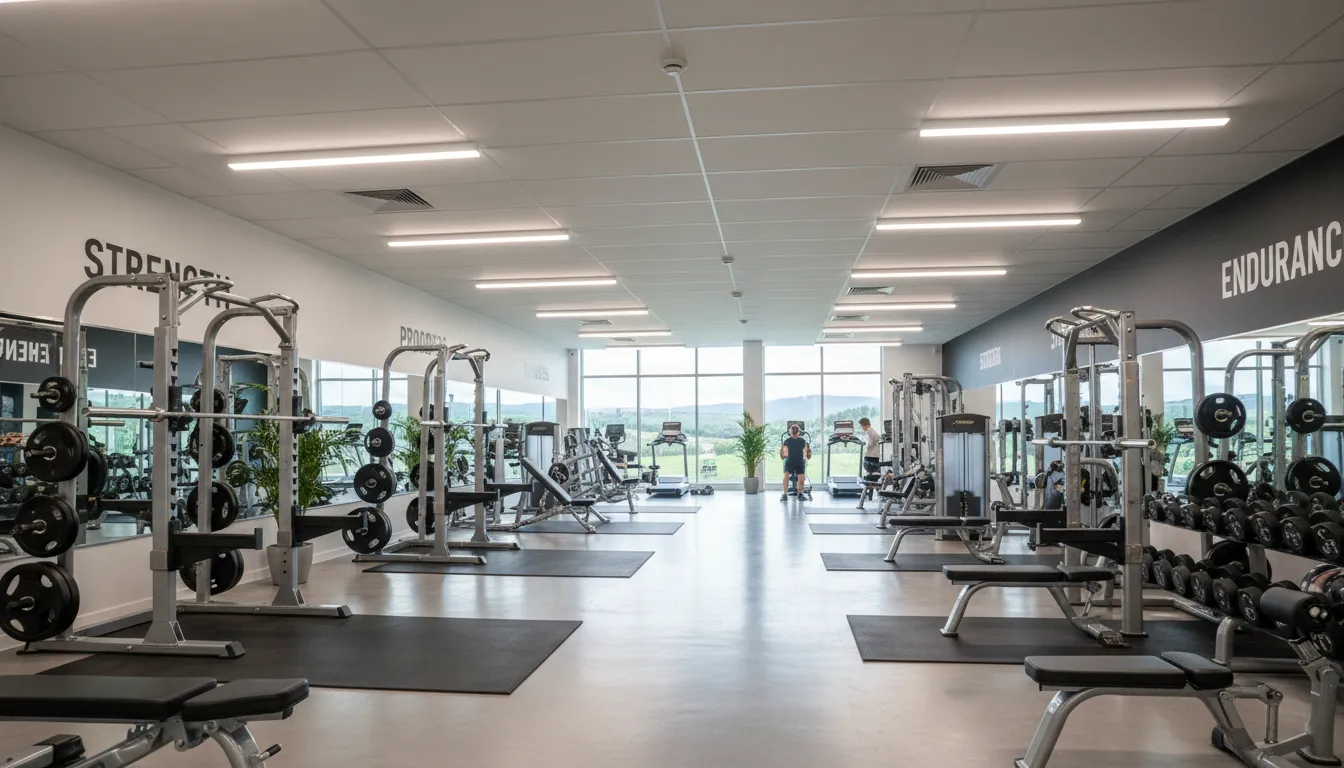
Here's what happens at most Irish gyms every January: a wave of new members sign up, half of them quit by March, and the gym owner wonders why retention is so bad. But here's the thing most gym owners miss — the problem often starts before someone even walks through your door. It starts with your website.
If your gym website is a single page with your address, a few photos of equipment, and a 'Contact Us' form... you're losing members to the gym down the road that lets people sign up online at 11pm on a Sunday night.
The Irish fitness market has changed dramatically. Between boutique studios, CrossFit boxes, 24-hour budget gyms, and personal training studios, competition is fierce. Your website isn't just a digital brochure — it's your 24/7 sales team, your class booking system, and your retention tool all in one.
The Convenience Factor Drives Conversions
81% of consumers research a business online before visiting in person. For gyms, that means your website has a single job: make it so easy to sign up that nobody has a reason to call a competitor instead. Every barrier to membership is a lost potential member.
Why Your Gym Needs More Than a Facebook Page
Many gym owners rely heavily on Instagram and Facebook for their online presence. Social media is brilliant for community building and showing off transformations — but it's a terrible place to run your business from. You don't own your audience, the algorithm decides who sees your posts, and there's no way to take online payments or manage memberships through a Facebook page.
A proper gym website does three things brilliantly: it answers every question a potential member has (pricing, classes, facilities, parking), it makes signing up effortless (online membership purchase, no phone calls needed), and it keeps existing members engaged (timetables, booking, challenges, content).
What Every Gym Website Needs
Not every gym needs the same website, but there are core features that separate a website that generates memberships from one that just sits there. Here's what matters most:
| Feature | Why It Matters | Priority |
|---|---|---|
| Online Membership Sign-Up | Members expect to join online — 24/7, no phone calls. Removes friction entirely. | Essential |
| Class Timetable & Booking | Live timetable synced with your booking system (Glofox, Mindbody, TeamUp). Members book from their phone. | Essential |
| Mobile-First Design | 70%+ of gym website traffic comes from mobile. If it doesn't work perfectly on a phone, you're losing members. | Essential |
| Pricing Page | Hiding your prices doesn't create mystery — it creates suspicion. Be transparent. | Essential |
| PT/Coach Booking System | Let members book personal training sessions directly. Saves admin time and increases PT revenue. | Recommended |
| Facility Gallery & Virtual Tour | High-quality photos of your space, equipment, and classes. Video walkthroughs convert browsers into visitors. | Recommended |
| Member Testimonials & Transformations | Social proof is everything in fitness. Before/after stories and Google reviews build trust instantly. | Recommended |
| Blog & Content Hub | SEO content about training, nutrition, and local fitness topics drives organic traffic and positions you as an authority. | Recommended |
Conversion Impact
Gyms with online sign-up see 40-60% of new members join through the website without ever calling. That's automated revenue while your team sleeps.
Retention Boost
Live timetables and easy class booking reduce member friction and drive engagement, increasing retention by 15-25% compared to email-based communication.
Online Membership Sign-Ups: The Non-Negotiable
If there's one thing your gym website absolutely must do, it's let people sign up and pay online. Full stop. The days of 'call us for pricing' or 'pop in for a tour' as your only conversion path are over.
Think about when people decide to join a gym. It's often late at night, after seeing a transformation post on Instagram, or on a Monday morning when motivation is high. If they can't act on that impulse immediately — if they have to wait until your reception is open — you'll lose a significant percentage of them.
The most popular gym management platforms in Ireland that integrate with your website include Glofox (Irish-founded, excellent for boutique studios), Mindbody (popular with yoga and wellness), TeamUp (great for class-based gyms), and ClubRight (budget option for traditional gyms). Your website integrates directly with whichever platform you use, so members can browse options, select a plan, enter payment details, and be set up — all without leaving your site.
Impulse Decisions Drive Growth
Fitness decisions are emotional. Someone watches a transformation video, feels inspired, and wants to join right now. If you make them wait 24 hours until your office opens, you've lost them. Online sign-up captures that impulse and converts it into revenue while motivation is high.
Class Timetables That Actually Work
Nothing frustrates gym members more than an outdated PDF timetable. If your website shows a timetable from three months ago, or one that doesn't match what's actually happening on the gym floor, you've got a credibility problem.
A good gym website pulls the live timetable directly from your booking system. Members can see what's on today, how many spots are left, and book their place — all from their phone while they're deciding whether to go. This live integration also reduces no-shows because members have committed by booking.
For CrossFit boxes and boutique studios where class sizes are capped, this is especially important. Showing '3 spots remaining' creates urgency and gets people off the couch.
Gym Types and Website Investment
What your gym website costs depends entirely on what it needs to do. A personal trainer running one-to-one sessions from a private studio has very different needs from a 10,000 sq ft commercial gym.
| Gym Type | Key Website Features | Typical Investment |
|---|---|---|
| Personal Training Studio | PT booking, testimonials, online programmes, payment | €3,000 – €5,000 |
| CrossFit Box | WOD display, class booking, community area, competitions | €3,500 – €6,000 |
| Yoga/Pilates Studio | Class booking, teacher profiles, workshop events, online classes | €3,000 – €5,500 |
| Boutique Fitness Studio | Brand-led design, booking, merchandise shop, membership tiers | €4,000 – €7,000 |
| Traditional Gym | Membership sign-up, facility showcase, class timetable, PT directory | €4,000 – €8,000 |
| 24-Hour Gym | Access control integration, self-service sign-up, multiple location support | €5,000 – €10,000 |
| Sports Club / GAA | Multi-sport timetables, membership categories, events, results, news | €4,000 – €8,000 |
| Gym Chain (Multi-Location) | Location finder, centralised booking, franchise consistency, member portal | €8,000 – €20,000 |
SEO for Gyms: Getting Found Locally
'Gym near me' is one of the most consistently searched fitness terms in Ireland. If your gym doesn't appear in the top 3 Google results — and ideally in the map pack — you're invisible to people actively looking for somewhere to train. Our team has optimised gyms and fitness studios across Dublin, Cork, Galway, and Limerick to dominate their local markets.
- Google Business Profile — Claim it, verify it, and keep it updated. Add photos weekly, respond to every review, post updates about new classes and offers. This is the single most important thing you can do for local visibility.
- Location-specific pages — If you serve multiple areas, create individual pages targeting each. 'Gym in Swords', 'CrossFit Galway', 'Personal Trainer Blackrock' — each gets its own optimised page.
- Class and service pages — Don't lump everything onto one page. Create dedicated pages for each class type (HIIT, yoga, spinning, CrossFit) and service (personal training, nutrition coaching, corporate fitness).
- Content marketing — Write about topics your potential members are searching for: 'best exercises for back pain', 'how to start CrossFit as a beginner', 'gym etiquette guide'. This builds authority and drives traffic.
- Review generation — Actively encourage Google reviews from happy members. A gym with 200+ reviews and a 4.8 rating will outrank a competitor with 15 reviews every time. For guidance on optimizing fitness businesses locally, check out Sport Ireland for best practices in the Irish fitness sector.
Local Dominance is Achievable
A gym with a fully optimised Google Business Profile, 50+ recent reviews, and location-specific content pages will appear above chain gyms in local search, even if those chains have bigger advertising budgets. Local SEO is the one place small gyms can compete effectively against major players.
Common Gym Website Mistakes
| Mistake | Why It Hurts | What to Do Instead |
|---|---|---|
| Hiding membership prices | Creates distrust — people assume you're expensive | Show all pricing clearly with what's included in each tier |
| No online sign-up option | Loses impulse buyers who want to join right now | Integrate Glofox/TeamUp/Stripe for 24/7 online joining |
| Stock photos instead of real gym photos | Feels fake — members want to see YOUR space | Invest in professional photography of your actual gym and members |
| PDF timetable | Never up to date, impossible to use on mobile | Live timetable synced with your booking platform |
| No mobile optimisation | 70%+ traffic is mobile — broken mobile = lost members | Mobile-first design with easy booking from phone |
| Ignoring Google Business Profile | Missing from 'gym near me' map results | Fully optimise GBP with photos, reviews, and regular posts |
| No social proof | New visitors have no reason to trust you | Showcase testimonials, transformations, Google reviews prominently |
| Relying only on Instagram | Algorithm changes can kill your visibility overnight | Own your platform — website + email list is your foundation |
| No clear call to action | Visitors browse and leave without converting | Every page should have a clear next step: 'Start Your Free Trial' |
| Outdated content | Signals the gym might be closed or poorly managed | Regular updates: new classes, member stories, blog posts |
| No free trial or low-barrier offer | Asking for full membership commitment from strangers | Offer a free class, 7-day trial, or discounted first month online |
The ROI of a Proper Gym Website
| Metric | Conservative Estimate |
|---|---|
| Average gym membership | €50/month |
| Average member lifetime | 8 months |
| Lifetime value per member | €400 |
| New online sign-ups per month from website | 10 |
| Annual revenue from website sign-ups | €48,000 |
| Website investment | €4,000 – €8,000 |
| ROI in first year | 6x – 12x return |
And that's conservative. A gym website that enables online sign-ups, reduces admin time (no more phone enquiries about class times), and improves retention through better communication pays for itself within the first few months. Factor in the PT bookings, merchandise sales, and corporate enquiries your website can generate, and the true return is even higher.
WordPress for Gym Websites
We build most gym websites on WordPress, and there's a good reason for that. WordPress gives you full ownership of your site (no monthly platform lock-in), integrates with every major gym management system, and lets you add features as your business grows — from merchandise ecommerce to online training programmes.
For class bookings, Glofox and TeamUp both offer WordPress plugins or embed codes that drop directly into your site. For payments, WooCommerce handles one-off purchases while your gym software manages recurring memberships. And for content, WordPress's built-in blog is perfect for the SEO content that drives organic traffic.
The key is building on a platform you own and control — not relying on a gym software company's built-in website builder that limits your design and SEO capabilities.
Your Gym Website Checklist
- Online membership sign-up with payment processing
- Live class timetable synced with booking system
- Mobile-first responsive design
- Clear pricing page with all membership options
- Professional photos of your actual gym and members
- PT and coach booking functionality
- Google Business Profile fully optimised
- Member testimonials and transformation stories
- Free trial or low-barrier offer prominently featured
- Blog with fitness and local content for SEO
- Fast loading speed (under 2 seconds)
- SSL certificate installed
- Analytics installed with goal tracking
- Email capture for leads who don't sign up immediately
- Social media links and Instagram feed integration
- Accessibility compliant (WCAG standards)
- Cookie consent banner (GDPR compliant)
- Facility virtual tour or video walkthrough
- FAQ section covering common membership questions
- Clear contact information and location map
Building Your Gym's Digital Presence
Whether you're a boutique yoga studio in Dublin, a CrossFit box in Cork, or a traditional gym in Belfast, fitness marketing fundamentals are the same: make it easy to join, easy to book, and easy to stay engaged. See how other service-based businesses like physiotherapy practices use their websites to drive bookings, or explore our dedicated gym and fitness website design guide for more comprehensive coverage, or check out ecommerce integration for selling merchandise and nutrition products online.
Frequently Asked Questions
How much does a gym website cost in Ireland?
A professional gym website in Ireland typically costs between €3,000 and €10,000, depending on complexity. A personal trainer's site sits at the lower end, while a multi-location gym chain with online sign-ups, class booking, and ecommerce will be at the higher end. The investment pays for itself quickly when it enables 24/7 online membership sales.
Should I use Glofox, Mindbody, or TeamUp for my gym website?
It depends on your gym type. Glofox (Irish-founded) is excellent for boutique studios and CrossFit boxes. Mindbody suits yoga and wellness studios with complex scheduling. TeamUp is great value for class-based gyms. All three integrate with a custom WordPress website. Choose based on your class structure, pricing, and whether you need a member app.
Can my website replace my gym management software?
Not entirely. Your website handles marketing, information, and the initial sign-up experience. Your gym management software (Glofox, TeamUp, etc.) handles ongoing membership management, access control, billing, and communications. The best setup is a website that integrates seamlessly with your management platform — they work together, not as replacements.
Do I need a separate app for my gym?
Most gym management platforms include a branded member app as part of their subscription. This handles class booking, membership management, and push notifications. Your website serves a different purpose — attracting new members, providing information, and handling the initial conversion. You need both, but the app comes from your gym software, not your website.
How do I get more members through my website?
Three things make the biggest difference: enabling online sign-ups so people can join 24/7, optimising your Google Business Profile so you appear in local searches, and offering a low-barrier entry point like a free class or 7-day trial. Combine these with regular content, member testimonials, and proper SEO, and your website becomes your most consistent source of new members.
Ready to Build a Website That Fills Your Gym?
Whether you're opening a new gym, upgrading from a basic site, or switching from a template that isn't converting — we can help. We build gym websites on WordPress that integrate with your booking system, enable online sign-ups, and rank in local search results.
Get in TouchWritten by
Founder of Web Design Ireland. Helping Irish businesses make smart website investments with honest, practical advice.